http://traditionalchineserecipes.blogspot.com/2011/06/chen-pi-niu-rou-tangerine-flavored-beef.html
You’ll find this dish on many stateside restaurant menus, especially those purporting to be Sichuan, Hunan, and even “northern” inspired. This version tries to be rigorously traditional, with hardly any ingredients besides tangerine peel and beef, such brevity of ingredients being typical of mainland Chinese cuisine.
While you will see this recipe translated into English as both “Tangerine Flavored beef” and “Orange Flavored Beef,” the Chinese tradition sees less of a distinction between the two. Tangerine, a type of small orange, is an English word deriving from Tangiers, the port from which these fruits were first shipped to Europe. On the other hand, orange citrus was known to China from earliest times and their remnants found in Han tombs. Today, anyone visiting Western China will notice small curls of orange peel drying on strings and in window sills in nearly every household. Even though small oranges have been savored in the Mainland for centuries, only a handful of cooked dishes feature them, Chen Pi Niu Rou being the best known. It is delicious on several levels, especially the balance of sweet opposed to the bitterness of the peel, the eating of which may be an acquired taste for Westerners.
If you have not air-dried orange or tangerine peel yourself in preparation for this dish, you can purchase the ingredient at a Chinese grocery, although it is not recommended. (To dry your own, just as most Chinese do, peel fresh tangerines or small, thin-skinned organges and dry the skins for several days in a drafty area or in an oven for about 1-1/2 hours at 110 degrees).
12 oz beef tri tip, sliced 1/8” x 2 “ by 1” or so
Dried tangerine peel from 2 small tangerines (appx. 20 pcs, 1/2” x 1” or so)
Marinade for beef slices:
2 thick slices of ginger, crushed with the flat side of cleaver
1 Tab light soy sauce
1 Tab Shaoxing wine or sherry
2 tsp cornstarch
Stir fry ingredients:
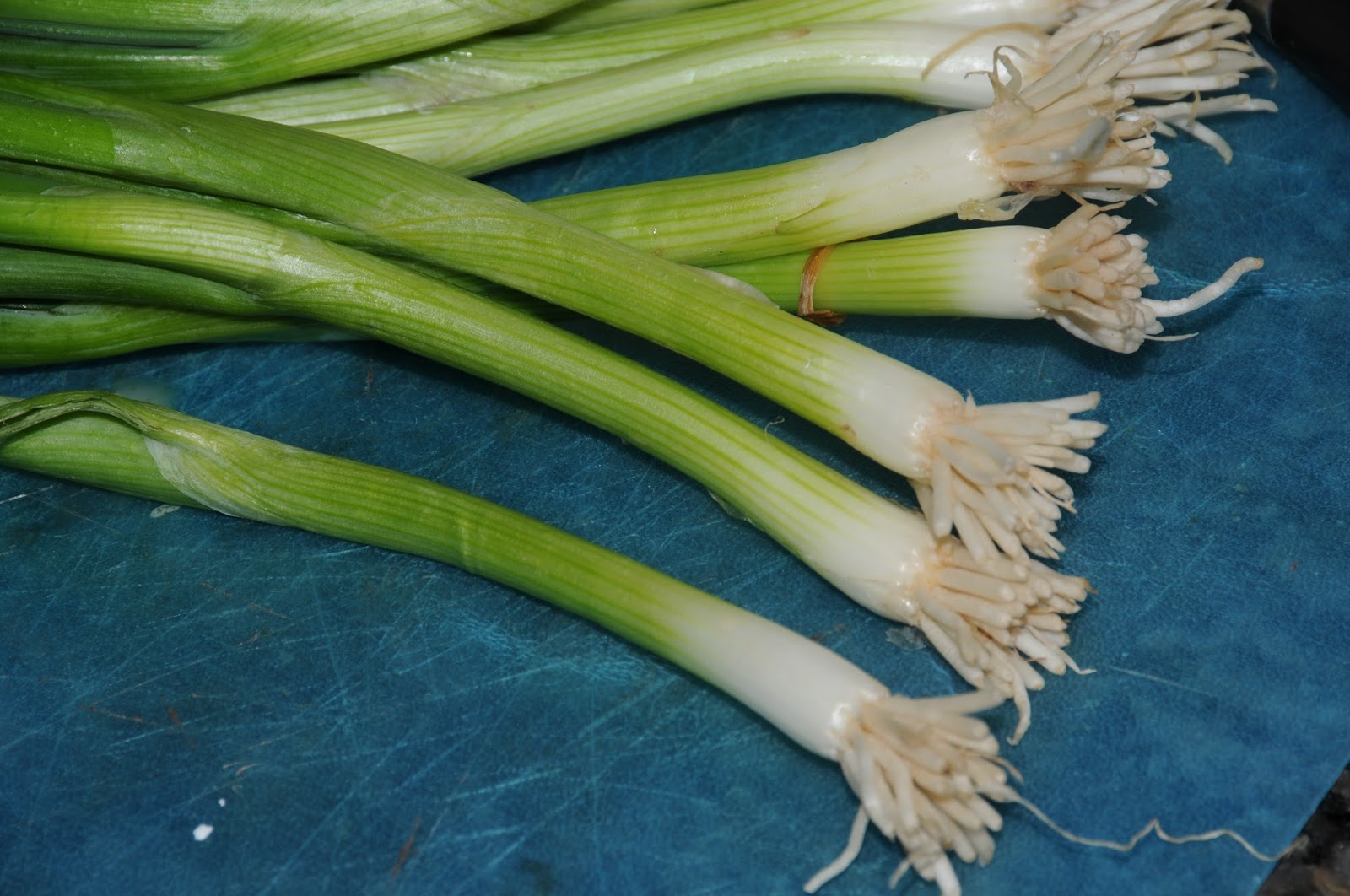
6 scallions, cut diagonally into sections, approx 1” long
separate white and green portions
6 lg dried chilis, sliced diagonal into 3/4 – 1” sections
4 cloves garlic, peeled and sliced
1 - 2 tsp Sichuan peppercorn, roasted and ground
1 Tab rice wine
Sauce:
2 Tab soy
4 Tab stock
2 Tab tangerine soaking water
1-1/2 Tab sugar
Soak dried orange peel in enough hot water to cover and allow to soften for an hour or more.
Add crushed ginger to the other marinade ingredients and allow to infuse while the beef is sliced as described. Mix beef slices with marinade, discarding ginger.
Heat wok until smoking, add 3 or 4 Tab of oil, and add beef slices. Brown the meat for 3 minutes or so, then remove. Add a little more oil, if necessary, and when oil begins to smoke, add white portion of the scallion, stir fry a little, then add chilis, tangerine peel, garlic and Sichuan peppercorn. When chilis are browned, deglaze with wine. On high heat add back the beef slices and green onion; add the sauce mixture after mixing it thoroughly, and toss everything until liquid is reduced enough to glaze the meat. Toss, plate and garnish with cilantro or slivered scallion.
elpful Hints:
This steamed fruit cake is a favorite for Chinese New Year.
Chinese Crullers
Ingredients
•
1 teaspoon salt
•
3/4 teaspoon alum
•
1 teaspoon baking soda
•
3/4 teaspoon ammonium bicarbonate
•
7/8 cup water
•
2 cups all purpose flour
•
8 cups oil for deep-frying
Directions
Place salt, alum, baking soda, and ammonium bicarbonate in a mixing bowl. Add water and stir until thoroughly dissolved. Add flour. Stir with chopsticks to make the dough soft and smooth.
Knead the dough until it is elastic.
Cover and let stand at least 4 hours.
Remove dough and stretch it into a long strip, 1/3-inch thick and 2 inches wide. Sprinkle with a little flour.
Using a knife or cleaver, cut dough into 20 strips 1/2-inch wide. Pick up a strip from the end with a spatula, turn it around and place it directly on top of the next strip (10 pieces).
Lay a chopstick on top of these double strips. Press down. Repeat process with remaining pieces.
Heat oil for deep-frying. Pick up one double strip. Hold the two ends and stretch it until it is 9 inches long.
Drop into hot oil. Turn dough on both sides continuously with chopstick until it is golden brown and expands. Remove and drain. Repeat with other strips.
May be prepared in advance and refrigerated or frozen. Before serving, thaw, if necessary, and reheat in oven at 400 degrees for 5 minutes.
This recipe is from Madame Wong’s Long Life Chinese Cookbook.
http://traditionalchineserecipes.blogspot.com/2011/12/joak-rice-porrige-or-congee.html
Joak (Rice Porrige or Congee)
Joak, Jook, or Juk (cantonese) Zhou (Mandarin) Rice Porrige or Congee
This is akin to fried rice, in that in Asia it is a staple comfort food with endless variations in the details of the recipe and condiments. There is not even agreement regarding the type of rice to use. All over the Asian continent, hundreds of millions of people begin their day in homes and cafes with Joak , yet it's simplicity belies the fragrant, silky deliciousness of rice porridge. Rice, water or stock and a dash of salt, simmered for an hour or two--the rest is an accent, and depends on what is available in the kitchen. It is also a major offering at dim sum, though it is hidden inside a warmer, on a cart, alongside a stack of bowls and chopped green onion.
9 cups stock (see techniques section on homemade chicken stock) or water.
1 cup short grain rice (calrose rice, not glutinous rice; long grain rice can be used)
salt to taste
Rinse the rice two or three times and drain through a sieve. Add the rice to a pot with the stock or water and bring to a boil, stirring often. Reduce to a simmer and cook for 1 1/2 to 2 hours, adding stock or water as needed to adjust texture. Add salt to taste. Joak is generally the texture of a thick soup or batter, and the grains of rice are barely intact.
As for the garnishes and additions, here is a list of typical items, ordered from the most to the least common, although it is purely a matter of personal taste. Feel free to use none or one or several…
Garnishes:
You tiao (Chinese fried cruller, shown in photo)
Green onion, sliced thin, diagonally
Fresh ginger, finely shredded
Pickled ginger, finely shredded
Pickled vegetable
Chinese black mushroom, reconstituted, stem removed, slivered
Cilantro
Additions:
Peanuts
Thousand year old egg, cut into eighths, lengthwise
Fish, filet, cut in pieces
Lop cheong (Chinese sausage) sliced thin, diagonally
Pork "dumplings" This simple addition can be made as follows:
Mix 8 oz. ground pork with a scallion, finely minced and 1 or 2 cloves garlic, finely minced. About 4 minutes before serving, pluck a teaspoon or so of the pork mixture with the fingers and drop it in the simmering joak. Repeat for as many dumplings as desired, then gently submerge the meat and allow to cook for 4 minutes, or until firm.
http://traditionalchineserecipes.blogspot.com/2011/08/zhu-rou-bao-zi-steamed-pork-buns.html
Zhu Rou Bao Zi (Steamed Pork Buns)
Pork Buns zhu rou bao zi
You won’t find these tasty snacks at the fine dining palaces of Beijing—instead, you’ll see Zhu rou baozi in the side streets and alleys of that super-metropolis. Understandably, the city bureaucrats, and even the central government in Beijing, want to modernize out of existence the seamier side of Chinese life; unfortunately, this includes the unlicensed, unsightly, and occasionally unsanitary street vendors to whom iron-gutted foodies like myself owe their most memorable experiences. In Beijing, during the long run up to the Olympics, the city all but eradicated these makeshift entrepreneurs, and replaced them with spiffy, red-aproned employees in ticky-tacky boxes, all in a row, calling it street food. The China daily shows off these sanitized street stalls in a small photo gallery featuring the more exotic morsels sold there. Nevertheless, try as they might, city administrators’ attempts to squelch Chinese capitalism is habitually doomed, and you will probably find delicious snacks sold by traditional cooks, out of site of the authorities, for decades to come.
So for now, north of the Yangtze river, in most cities, you will find some sort of baozi sold by sidewalk vendors; they are an inexpensive snack, and yet, along with noodles and rice, constitute the a major staple of the Chinese workers who buy them from their favored neighborhood purveyor. Along with baozi, especially in the morning, these same vendors will often sell mantou, which is steamed wheat flour bread with no filling.
Baozi are sold in many configurations, small to large, fried and steamed, steamed and in southern China, baked. They are close cousins of jiaozi, dumplings, but are usually larger and wrapped with a leavened dough. Baozi have many different fillings—pork and cabbage, vegetables, toufu, mushrooms, red bean paste, lotus seed paste, roast pork, chicken, all with local variations in seasonings and preparation. Nevertheless, the pork and cabbage version, zhu rou bao zi (猪肉包子) is most common.
The yeast dough:
3 cups of bread flour
1 cup warm water (110° F)
1-1/2 teaspoon dry yeast
2-1/2 Tab sugar
2 Tab peanut oil
1-1/2 teaspoon baking powder
The Filling:
1-1/2 lbs Pork (pork belly or rib meat)
1-1/2 lbs Napa Cabbage
1" x 3" washed, unpeeled ginger
1 cup water
2 scallions, minced
1/2 tsp white pepper
1 Tab soy sauce
1 rounded tsp salt
1" x 1/2" pc peeled ginger, minced
1 medium clove garlic, minced
1 tsp Shaoxing wine or dry sherry
2 tsp sesame oil
1 tsp cornstarch
Smash the unpeeled ginger with the flat of a heavy cleaver so that it will release its juices. Put the ginger in the cup of water, stir, and set aside--1 to 2 hours is preferable.
To the cup of lukewarm water, add the sugar and the yeast and stir until it dissolves. In the meantime, sift the flour into a bowl. When the yeast mixture is foaming, add it to the flour and mix vigorously until the mass begins to stick together. Add the oil, and when the dough coheres enough to remove to the counter and knead for 10 minutes, until it is smooth. It is very important that the dough be soft. Do not add more flour unless necessary to keep it from sticking to your hands and the kneading surface. Once the dough is kneaded, oil the surface with peanut oil and place in a covered bowl in a warm place.
Separate and blanch the cabbage leaves for 2 or 3 minutes in a large pot of boiling water. Remove, drain, and cool. When it is cool enough to handle, roughly chop the cabbage and put in a clean hand towel. Wring out as much of the water as possible, then mince.
Mechanically grind or chop with a cleaver all of the pork into a dice of approximately 1/4". Set aside about a third of this, and mince the remaining pork very fine. Mix together the cabbage, the minced ginger, minced scallion, minced garlic, salt and pepper. Mixing thoroughly with a wooden spoon or paddle of a kitchen mixer, add the cup of strained ginger water, soy, wine and sesame oil. Add cornstarch, and mix in one direction for several minutes. The filling should be moist, almost like batter; add chicken stock if the filling seems stiff or dry.
Making the Baozi:
Have the steamer ready before you begin.
When the dough has doubled in bulk, and you are ready to make the baozi, punch down the dough and make several indentations in the dough with your fingers. Sift the baking powder into these holes, fold up the dough and pinch the edges together to contain the baking powder. Knead for five minutes, or until the baking powder is thoroughly incorporated. Cover the dough ball and let it rest for five or ten minutes. Form the dough into two ropes, approximately 1-1/2" in diameter, then cut the ropes into sections approximately 1-1/2" long. Roll each segment into a ball, place, separated, on a tray, and cover.
To make a baozi, flatten one of the balls with your hand, keeping it as round as possible. Roll the discs into approximately 4” rounds, as thin as possible on the edges, and 1/8” or so in the center. Roll out several rounds and keep them covered as you begin to fill the baozi (Doing these somewhat ahead once again rests the dough and makes them more manageable). Smear a couple of heaping tablespoons of filling to the skin, leaving a border of a half inch or so, and begin pleating the very edge with your fingers and thumb, overlapping the dough by a quarter inch or so. The pleat should be squeezed firmly and pulled slightly vertically to prevent the top of the finished bun from being too thick. As you pleat, rotate the baozi clockwise, making sure the filling remains well below the edges of the bun. Complete the process by closing the top with a spiral twist. Place the pleated baozi, separated from one another, on a steamer tray lined with perforated parchment paper or (napa) cabbage leaves and steam, covered, for 14 to 15 minutes. It is very important to make one or two sample baozi to test for salt and seasonings. When you've done this, you are ready to complete the batch of 20 - 30 baozi.
Zhu Rou Bao Zi can be frozen, once they are steamed and cooled, with very little deterioration. They can also be microwaved to re-heat, but steaming for 12 minutes (from frozen) is far superior.
http://traditionalchineserecipes.blogspot.com/2011/06/chao-shanghai-cai-stir-fried-shanghai.html
Chao Shanghai Cai (Stir fried Shanghai Bok Choi with garlic)
There is some confusion about what to call various greens in the Chinese repertoire. Bok choi, means white vegetable in Cantonese, and generally refers to the larger white cabbages (pekinensis cultivar group) which in the West are recognized as napa cabbage; in Beijing, the mandarin equivalent is bai cai, and when in season, you’ll see enormous piles of these big cabbages on neighborhood streets, awaiting distribution to homes and restaurants for preserving, boiling and stir frying (The Beijing authorities nearly eliminated this "unsightly" practice during the 2008 Olympics). However, the popular name for the vegetable in this dish is Shanghai Bok Choi which is not even remotely large or entirely white. In fact, Chinese cooks enjoy the very small leaves of this cabbage, the smaller the better. Again, the preparation is extremely simple, featuring the superb texture and flavor of this delicious, healthy vegetable.
1 lb Shanghai bok choi, or Shanghai Choi, trimmed
3 med garlic cloves, minced
1/3 tsp kosher salt (or, if you prefer, 1 Tab light soy sauce)
2 – 3 Tab peanut oil
Sesame oil
Wash and thoroughly dry the cabbage. Trim the base from each cabbage head so that all of the leaves separate.
Prepare other ingredients.
Heat wok to medium, add peanut oil and when it is hot, toss in garlic. Stir fry quickly for 5 or 10 seconds, add Shanghai bok choi, stir fry for one minute or so and add salt (or soy if you prefer). Cover, turn heat down to low medium, and allow cabbage to steam in its own juices for 2 minutes or so, or until the leaves are limp and the stalks begin to shrink and soften. Adjust saltiness if necessary. Plate the Shanghai choi on a platter and garnish with sesame oil.